
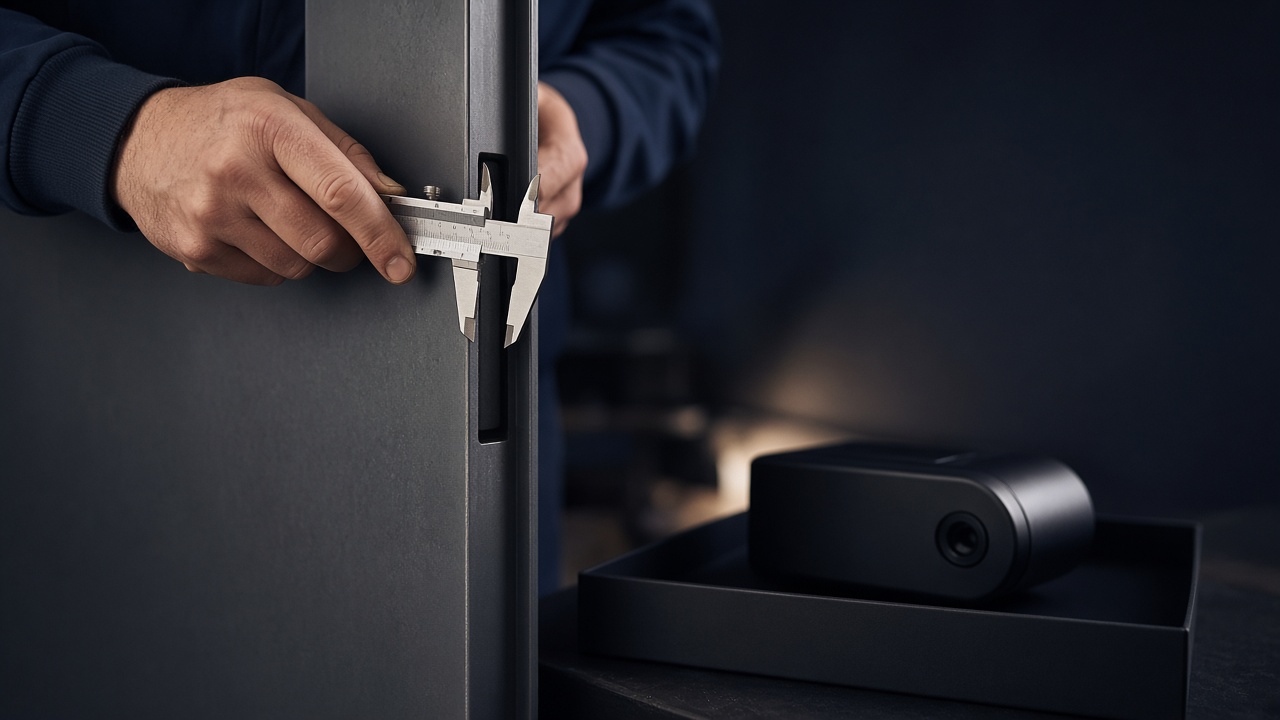
Door material, thickness, handing, and existing preparation determine whether a smart lock can be installed at all, so those measurements belong in the specification before a model is approved.
Overseas project delays often come from a lock that was chosen from a photo and then offered to a door that is too thick, already reinforced in the wrong place, hinged on the opposite side, or fitted with a closer that fights the latch. Wooden doors, security doors, and stainless-steel doors fail in different ways, and an outdoor or coastal opening adds sealing questions that a living-room door never raises. This article is the installation section of a project specification. For the wider decision sequence, start with How to Specify a Smart Lock for Overseas Residential, Apartment, and Commercial Projects.
Current Hobere featured models include products described as suitable for wooden, security, and stainless-steel doors, but compatibility on a product page is not a completed site survey. Confirm the installation drawing against the actual door.
Survey the door before you shortlist the lock
A useful survey is a short set of measurements and photographs, not a verbal assurance that "this is a standard door."
Record at least:
- Door material and construction: solid wood, wooden door with a metal frame, security door, stainless steel, or another build
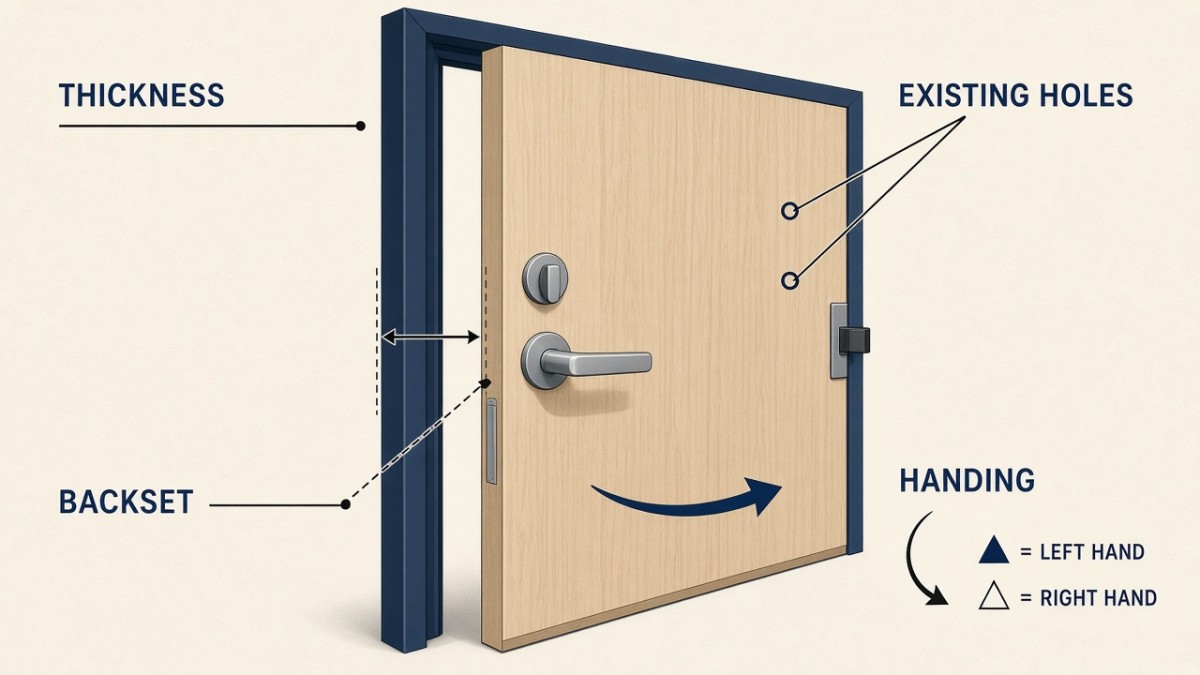
- Thickness at the lock position, measured, not estimated
- Handing and whether the door is inward- or outward-opening
- Existing hole pattern, backset, and any reinforcement plate
- Latch and bolt positions, and whether a new mortise or additional drilling will be allowed
- Door closer, floor spring, or other hardware that affects closing force
- Frame condition, strike-plate alignment, and clearances
- Exposure: indoor, sheltered outdoor, fully outdoor, or coastal
- Photos of both sides of the door, the edge, and the current lock or handle
If multiple door types exist on one project, group them. An apartment corridor door and a ground-floor outdoor gate should not share a specification just because they share a building.
Wooden doors need thickness, edge condition, and handle choice confirmed together
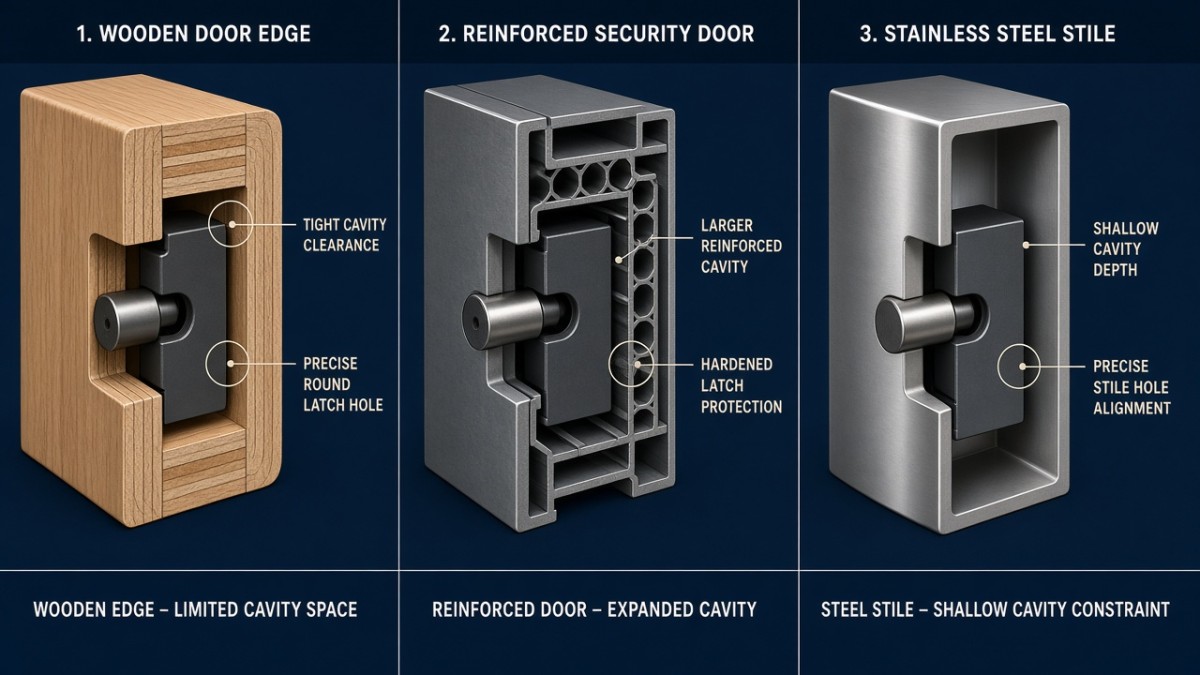
Wooden doors are often the most straightforward to prepare, but they still fail installation when thickness, edge splitting, or a heavy closer is ignored.
Handle-style featured models such as the Hobere A3 and A4 are positioned for wooden doors. They are a reasonable starting point when the project wants a familiar lever, fingerprint, password, card, app, and key access-provided the factory confirms the method set and the door-thickness range on the quotation. Do not copy a thickness range from marketing copy into a bid unless it has been confirmed for the exact configuration. A1 and A2 are also featured names in this series, but their short product URLs are not reliably live, so confirm those models directly with the factory.
Check the door edge where the latch comes through. Soft or damaged wood may need a repair or a reinforcement plate before a smart lock is fitted. If the door already has a non-standard hole pattern, ask whether the chosen model can use it or whether a new preparation is required. Indoor wooden doors also raise less of a sealing question than outdoor openings, but a wooden entrance that faces rain should still be treated as an environmental specification, not only a carpentry one.
Security and stainless-steel doors need the existing metal preparation to be treated as a constraint
Security doors and stainless-steel doors usually have less freedom to drill, so the existing lock case, hole pattern, and reinforcement determine the shortlist.
A security door may already contain a multi-point or heavy lock body, a thicker skin, or a restricted cavity. A stainless-steel or metal entrance may have a narrow stile, a welded reinforcement, or a hole pattern that does not match a wooden-door handle lock. In both cases, the installer should work from the manufacturer's drawing and from photos of the actual door, not from the assumption that a lock "fits most doors."
Several current featured models, including visual and embedded locks such as H8Pro, D3, Q10, and outdoor-positioned models such as H6Pro-F and Q9-F, are described on their live pages as applicable to wooden, security, and stainless-steel doors. That is a starting claim to verify, not a reason to skip measurement. Embedded designs in particular need a clear statement of cut-out size, door thickness, and whether the door leaf can accept that preparation.
If a page mentions additional materials, such as aluminum or glass, treat that as a question for the factory. Glass-door or narrow-stile installations can require different hardware, and this series does not treat them as confirmed by default.
Outdoor and coastal doors add sealing and corrosion checks to the mechanical survey
A door that faces rain or salt air needs an installation specification that includes sealing, drainage, and corrosion evidence, not only hole positions.
Positioned waterproof or outdoor models such as the Hobere H6Pro-F and Q9-F are the right shortlist to discuss for exposed openings, but this series does not publish an IP rating or salt-spray hour figure for those models. Ask for the test method and any rating that applies to the exact unit, and do not treat rain resistance as proof of coastal performance. Those environmental questions are covered in Waterproof and Coastal Smart Locks: Rain Is Not the Same as Salt Spray.
Installation quality affects weather performance as much as product design. A poorly sealed cable opening, a gap around a cassette, or a strike that leaves the door slightly open can undo a waterproof housing. The survey should therefore include how the door closes and whether a closer will be used.
Installation is also a user-flow and power check
The mechanical fit is unfinished until inside egress, auto-lock timing, and emergency access have been checked on the actual door.
A handle-operated lock and a more automatic lock interact differently with a closer and with users who are carrying bags or exiting in a hurry. Confirm the opening and exit behavior on the quoted model. Confirm the mechanical-key path. Confirm the emergency-power interface on that model: D3 has documented emergency-power materials, including phone reverse charging in some materials and a Type-C power-bank path on the current product page; other featured models should be confirmed rather than assumed.
If the lock includes a camera or indoor screen, installation height and lighting become part of the survey. A face-recognition camera mounted without a lighting check will create support calls that look like product failures.
App platform does not change the drilling plan, but it should still be recorded at installation handover. Tuya is supported on A1, A2, A3, A4, D3, Q10, H6Pro-F, and Q9-F. H8Pro uses Dingding Smart (叮叮智能), which is not DingTalk. The installer or project owner should complete enrollment and show the local fallback methods before leaving the site.
What to attach to the RFQ
The installation appendix should be short enough that a factory engineer can read it once and see the risk.
Attach:
- Measurements: thickness, backset, handing, opening direction
- Photos of both sides, the door edge, the frame, and the current lock
- A note on closer or floor-spring hardware
- The door-type groups on the project and the quantity in each group
- Environment: indoor, outdoor, or coastal, and any test evidence you will require
- Whether new cutting or only replacement of an existing lock is allowed
- Preferred handle or automatic behavior, described as a user action
- Destination country and who will perform installation
Live product pages that may help a first shortlist include A3 and A4 for wooden-door handle locks, H6Pro-F and Q9-F for outdoor-positioned locks, and H8Pro, D3, and Q10 for visual or embedded designs. The D3 page is live even though its URL still uses an older "Simple Style" slug; refer to the product as D3.
Questions worth closing in writing
What door-thickness range is confirmed for the exact model and lock body being quoted?
Ask for the drawing, and measure the door.
Can this model use the existing hole pattern, or is a new preparation required?
Especially important on security and stainless-steel doors.
Is the opening indoor, outdoor, or coastal, and what evidence is being provided?
Do not accept a generic waterproof claim as the whole answer.
Who is responsible for alignment, sealing, and handover enrollment?
Installation quality and user setup are part of project risk.
What happens if a door in the same building is a different thickness or handing?
Group the doors before you approve a single SKU.
Talk with Hobere about door surveys and installation drawings
Hobere can review door photos and measurements against a featured model and confirm whether the standard preparation will work or whether another configuration should be considered. Send the survey details to hongtusmartlock@hobere.com, or use the Contact page.
Hobere

Thank you very much for writing to us. Please leave your message and contact information, we will reply to you within 24 hours.